How To Sell Silver?
Silver is not a new precious metal asset by any means. In fact, it’s presence goes so far back in history, silver along with gold are two of the oldest assets known in recorded history. And in…
Silver is not a new precious metal asset by any means. In fact, it’s presence goes so far back in history, silver along with gold are two of the oldest assets known in recorded history. And in addition, archaeologists have continued to find proof of silver’s use well before mankind had a really good idea how to smelt and make tools from metals as well. Today, silver is far from the ancient jewellery or tools it was used for in history. It plays a critical role as an electronics component as well as an industrial metal used in other production. Silver also still holds a cherished place in fine silverware for dining, accessories for a home or office, and fine jewellery as well. And, while it is on the lower end of the value spectrum, silver also enjoys bullion status with national governments who use the metal to regularly mint coins for collections and investment. So, despite how long silver has been around, it still continues to be in demand, and the metal in all forms continues to be usable as an asset that can be sold later for real cash value.
Silver’s History
By already 3000 B.C. humans were actively mining and pulling silver out of the ground. It wasn’t particularly useful in terms of coins or currency at that time, but the metal was being used for jewellery and items of artwork and crafting. Some 2,500 years later, the first coins actually appeared. This allowed silver to be used as currency which, while already being seen as lesser value than gold, made it easier to give value to partial amounts of gold in exchanges and trade. No surprise, silver became quite useful in international business, being used to liquidate goods in multiple markets and still being able to retain value when one returned home after selling everything. Some 300 years later, the Romans expanded silver even further. The metal was adopted as the Roman official currency material for all of its primary coins. By the time Jesus was born, silver was as common as the U.S. Dollar is today or the Euro for international currency. And Jesus referenced in the Scriptures being sold out by Judas for thirty pieces of silver. Halfway around the world in the East, China began to use silver as well for the currency. The exact date is not clear but it did happen somewhere between 200 B.C. and 200 A.D. This continued well into the 16th century when Spain and Portugal reached China and began to open up trade across the Pacific with the Chinese. By this point the Chinese were desperate for silver, having exhausted their domestic supply. Suddenly, the Portuguese are able to buy anything and everything China has with new, unlimited silver, and the gloves were off. Many believe in hindsight this was the undoing of ancient China but silver had such a dramatic effect, Portuguese knew they hit the jackpot at the other side of the big ocean. While the British had were well-ensconced with their gold guineas, the Americans fresh from a revolution decided in 1794 that silver would make for a fine national currency. And the first U.S. silver dollar was minted and sold. This set off a coin trend that would last well into the next centuries until 1964 when the last circulated U.S. coin was made with silver in its content. Being taking out of circulating currency didn’t stop or weaken silver demand, however. The minor precious metal continued to be used for commemorative coins and medals as well as awards, there continued to be a strong market for silverware for fine dining, and the industrial market was growing as both Europe and the U.S. were booming after World War II. In fact, in 1980 silver reached its highest value on record at $50 a troy ounce, and it continued to bump around in the mid $30s through the 2000s. Interestingly, despite the pandemic and economic turmoil of 2020, silver has been relatively affordable still in the range of upper $20 per ounce. And many are projecting a rise soon back to higher levels because of that affordability.
Industrial Demand for Silver
As technology has increased, so has the demand for silver in bulk for industrial use. Some of the latest technology is utilizing silver for connections and motherboard applications as well as reliably handling circuitry demand with thermal conditions. Additionally, silver has regularly been used in the medical field for preventing infections, dealing with burn injuries, addressing skin conditions, helping with radiology and implants as wells as prostheses, and it has been used for decades in fillings until recent years. In an extreme environment water becomes essential, and silver ions have become extremely useful in purifying water as well as removing harmful bacteria that could cause digestion problems in people. This has proven itself in space missions where water has to stay in storage and can otherwise build up bacteria when not being replenished regularly.Purity
Considering your silver for sale means first understanding what you actually have. In most cases for a household, silver is often owned in one of three forms: jewellery, coins or silverware and accessories. It’s important to keep in mind the nature of the metal in these forms. Silver is quite soft compared to most other common metals, and it can be worn out fairly easily. To solve this problem, silver is regularly combined with other metal alloys that make it stronger for daily use. These metal alloys like copper enhance silver’s longevity, rigidity and “wearability”. However, the average person would not be able to tell an alloy from a pure silver right away just by sight. The first sign of purity or alloy comes with jewellery. Fine jewellery tends to be marked with a number that indicates its purity present. High-quality silver pieces often have such a number marker or marker’s mark. As an example, sterling silver pieces are usually marked with “925”. This is not to say that unmarked silver has no value; silver without a mark and silver that does not qualify as sterling can still have considerable value. However, when marked, silver purity is indicated with percentages. The highest silver purity is 99.9 percent. Other purity levels range from 80 percent to 92.5 percent and 95.8 percent. Government coins, on the other hand, range from an extreme of almost 100 percent silver to junk silver. Mint bullion coins are typically 99.9 percent pure silver. These are sold for collection and show and have no circulatory value at all. Yet, as we mentioned before, countries mixed in silver with other metals for years, creating partial silver coins that went into circulation quite a bit. These too have fallen into collections but are dubbed “junk silver.” Many of them have 90 or even only 80 percent silver, and because they were used in circulation they are beat up most times. These coins will still get value but they will not be sold for a full silver price because they are not pure. Other items like silverware or silver table pieces may not be marked at all as above. Instead, owners may have the documentation for the sets or pieces, or the manufacturer’s mark will be on the item which is recognizable to silver buyers. In these cases, silver items that have documentation or brand marks will likely sell very well as they are a known commodity and will easily pass evaluation and testing. Finally, there is all other scrap silver, which is essentially silver items that may or may not have full purity, but their content and make are simply unknown. This can range from rings handed down to necklace chains to silver metal fixtures, like handles for example. These will all need to be tested, but to the extent, they are silver in substance, they can sell for value.
Getting an Honest Evaluation
Gold Smart will always be interested in buying your silver, gold and platinum. Our customer service is top-notch and our prices are fair, which is backed up by our years of business and reputation as well as hundreds of customers who have been with us for years. If you have silver, Gold Smart is looking to buy it, providing you a viable channel for selling you scrap silver that is no longer wanted. And, we purchase a wide array of silver bullion and jewellery, so bring all your pieces if considering a sale. We look at all silver makes or sizes from jewellery to coins to silverware. During the evaluation process we look at every piece a customer brings in to confirm its quality and fineness. As mentioned above with purity, silver usually averages between 80 and 96 percent fineness. Any marks, documentation, branding and similar will help in this regard, but it’s not conclusive. As professionals, Gold Smart buyers will still confirm the metal content as, unfortunately, there are lots of fraudulent players with very capable means of producing fake metals. We will also weigh the piece to confirm its objective quantity and mass. The good thing is, your silver can be old, scuffed, scraped or tarnished, and we will still buy it if confirmed as genuine silver metal. We are always interested in all silver pieces regardless of their condition. No surprise, damaged silver jewellery, coins and silver bullion will be considered for purchase at their melt value and the same would apply to other silver items in scrap condition not in sets etc. Where an item is a particular known fine brand, we will seek these out and price them accordingly as well. However, because Gold Smart is a professional metal buyer and not a numismatic dealer per se, we will not price coins for their collectability. Customers hoping for collection-level pricing should seek out numismatic dealers for coins instead.The Types of Silver That Will Likely Be Bought
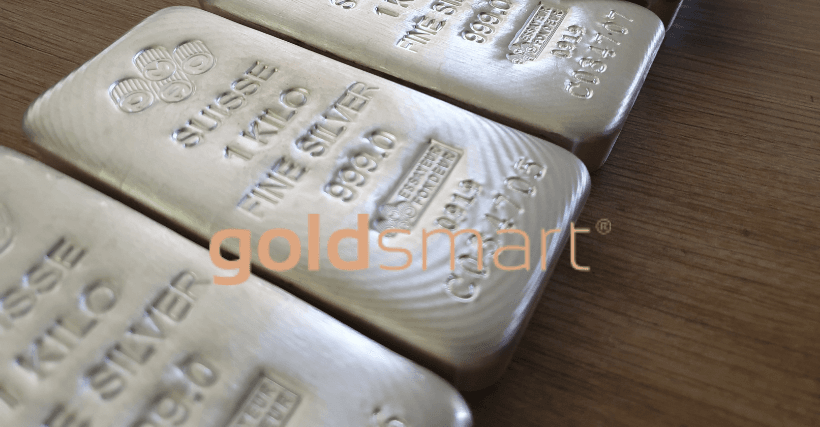
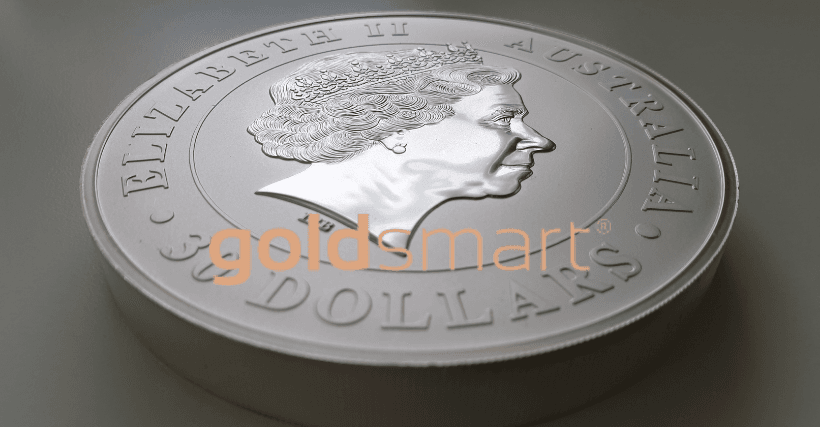
We are interested in almost anything that has solid silver in it. From undesired silver jewellery to bullion bars, coins, silver cutlery, silver wire, scrap silver and beyond, our Gold Smart team will make a competitive offer for just about every type of silver. We are also interested in sterling silver odds and ends like beads, bails, clasps, fittings, clips, links, pins, studs and tubes. As long as they don’t have stones embedded in them or are mixed with other metals, we will evaluate the silver for purchase. And, we regularly buy coins. Silver Buffalo Coins, Silver Eagle Coins, all World Mint silver coins, Silver Maple Coins and plenty of other government-issued coins will get a positive reception. Examples of silver to sell also include 1oz Silver Bullion (including silver Kiwi Ferns, Silver Kookaburras, Australian Silver Koalas, Canadian Silver Maples, Mexican Silver Libertad, Chinese Silver Panda, Austrian Silver Philharmonics), 99.99% 1kg Silver Bars (PAMP Suisse, J&M, AGR, NZ Pure Silver, ABC, Perth Mint Silver), old silver coins that have no numismatic or collectors value (including Morgan Dollars, Liberty Head “Barber” half-dollars, some quarters, dimes and nickels, Crowns, Half Crowns, Florins, Shillings, Six Pences, Three Pences). Remember, scrap silver can also be converted to a cash value as well with Gold Smart. Because we are situated as a primary consolidator, we are able to take in all types of silver for melting purposes and converting the pieces back into bulk silver for resale to the general market. Some buyers will be industrial while others will be looking for material to use for new consumer products. Because we source from all types of customers, including private individuals, on a regular basis, we are able to intake any and all types of silver versus just government-issued bullion. That means your odds and ends silverware, silver dishes, cabinet and drawer fixtures or knobs made of silver, and decorative cups or teaspoons all fall in the same category. For example, anything that is marked sterling silver is pretty much a known 92.5 silver content. That’s a very viable form of silver scrap or undesired piece, and worth far more than some of the lower quality pieces at 80 percent for the same weight.